Thought of Mrs A
  • Home
  • About me
  • Features
  • Life
  • Travel
  • Portfolio
Category:

My Thoughts

My Thoughts

The increasing cost of childcare – A case of working mothers

by mrsa February 4, 2026

I was having a chat recently with the couple that ran my son’s school breakfast and after-school clubs and they were highlighting the fact that they have got their hands so full with over 50 kids now compared to what it was a couple of years back when they barely had 10 kids to manage. Times have changed and there are now more working mothers than ever before. The truth is that in many societies, families can no longer depend on only one source of income. Mothers are obliged to return to work at the end of their maternity, which in turn means that parents have to rely on childcare services more than before. What the couple and I didn’t discuss though is the struggle of the parents of those 50 kids to keep up with the increasing cost of childcare.

Continue Reading
February 4, 2026 0 comments
0 FacebookTwitterPinterestEmail
My Thoughts

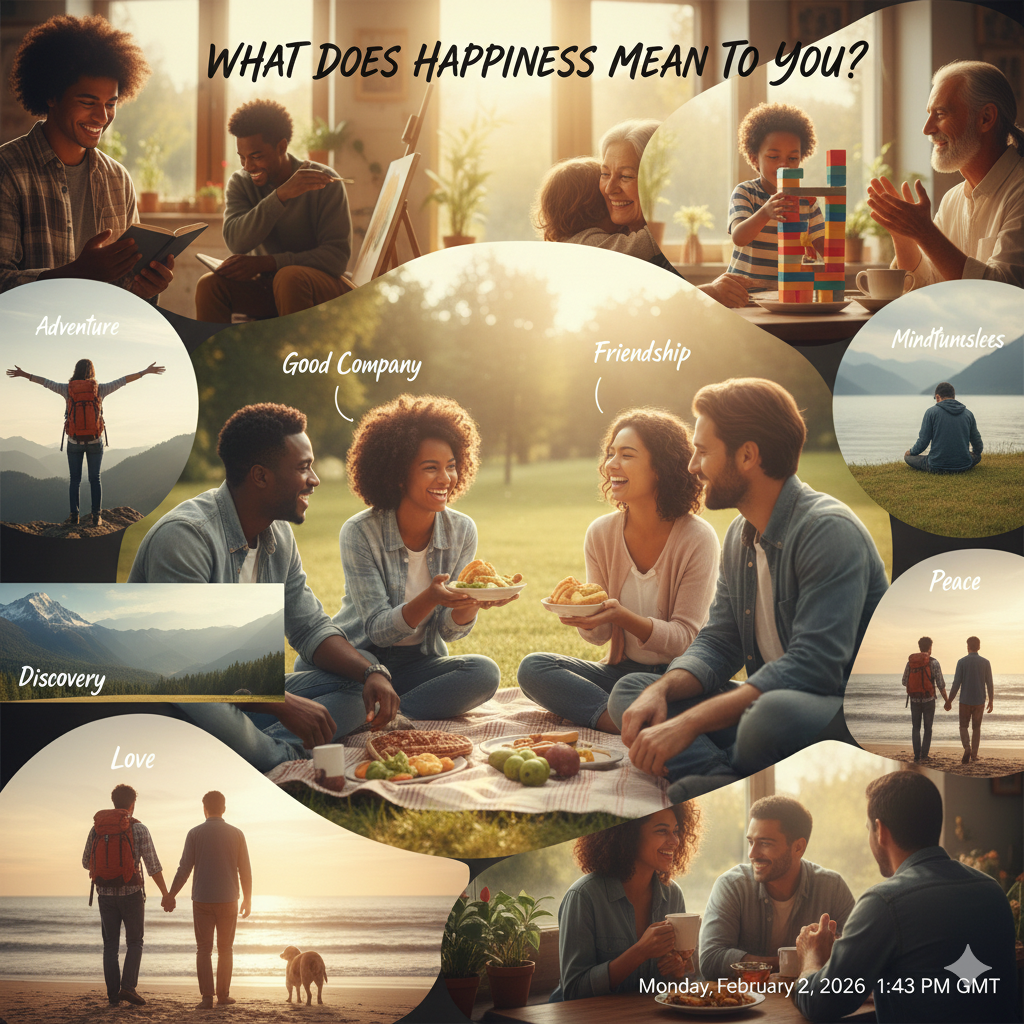
What does happiness mean to you?

by mrsa February 4, 2026

Have you ever asked yourself if you are happy? I mean deep down, no pretense truly happy. Do you think you know what happiness feels like? How can you even tell whether you are happy or not? What does happiness mean to you? A lot of times people use the words ‘Joy’ and ‘Happiness’ interchangeably but I want to assume that they are not quite the same. My online dictionary described Joy as an emotion of great delight caused by something exceptionally good or satisfying, for instance, a mother will say that my children give me great joy. This does not necessarily mean that the said mother is happy. The same dictionary described happiness as the quality or state of being happy.

From these definitions, one could easily ask whether we are truly happy if we have a lot of joyful moments in our lives? However, it seems like while there could be fleeting joyful moments in one’s life, happiness is rather a permanent state of mind. When someone asks you ‘Are you happy’ it usually means ‘Are you satisfied with your life’ rather than ‘Do you feel joyful at the moment. Life is adept at throwing us some ouch moments of unforeseen occurrences and moments of not receiving what we wanted or hoped for so this could imply that the permanency of happiness is equally debatable.

Some philosophers have expressed that for a person to experience happiness, they must have experienced unhappiness of some sort. Perhaps there is no such thing as a state of happiness; maybe we are all on a journey to that happy destination. Who knows! My mother, being such a positive person thinks that happiness is mainly based on our perception of things. She believes that if you see the good in everything, then you are likely to be happy.

I believe that happiness is mainly – if not completely subjective. A person has to decide what makes them personally happy. What makes one person happy will not necessarily make another person happy. The society tells us that we should be happy and as a matter of fact prescribe the keys to our happiness: noble education, good job, a faithful partner, good-looking family, religion, success, wealth… the list is not exhaustive. Money certainly makes life a lot easier but I will not equate money with happiness. According to Benjamin Franklin, ‘Money has never made man happy, nor will it; there is nothing in its nature to produce happiness. The more of it one has, the more one wants’

There is evidence suggesting that people who focus on being happy may actually be less happy. A constant pursuant of happiness could easily lead to unhappiness if the mind is unable to attain the happiness targets that it has set for itself. The essence of living is in the moment, not thinking about what has been and what will be and instead focusing on being happy at the present moment.

I have chosen to be the master of my own happiness. I make my happiness and I guard it protectively. My happiness is an overall feeling of consistent contentment and pleasure in being alive, regardless of daily situations, opportunities, and threats. Being genuinely happy for others further nourishes my own happiness.

What does happiness mean to you?

February 4, 2026 0 comments
0 FacebookTwitterPinterestEmail
My Thoughts

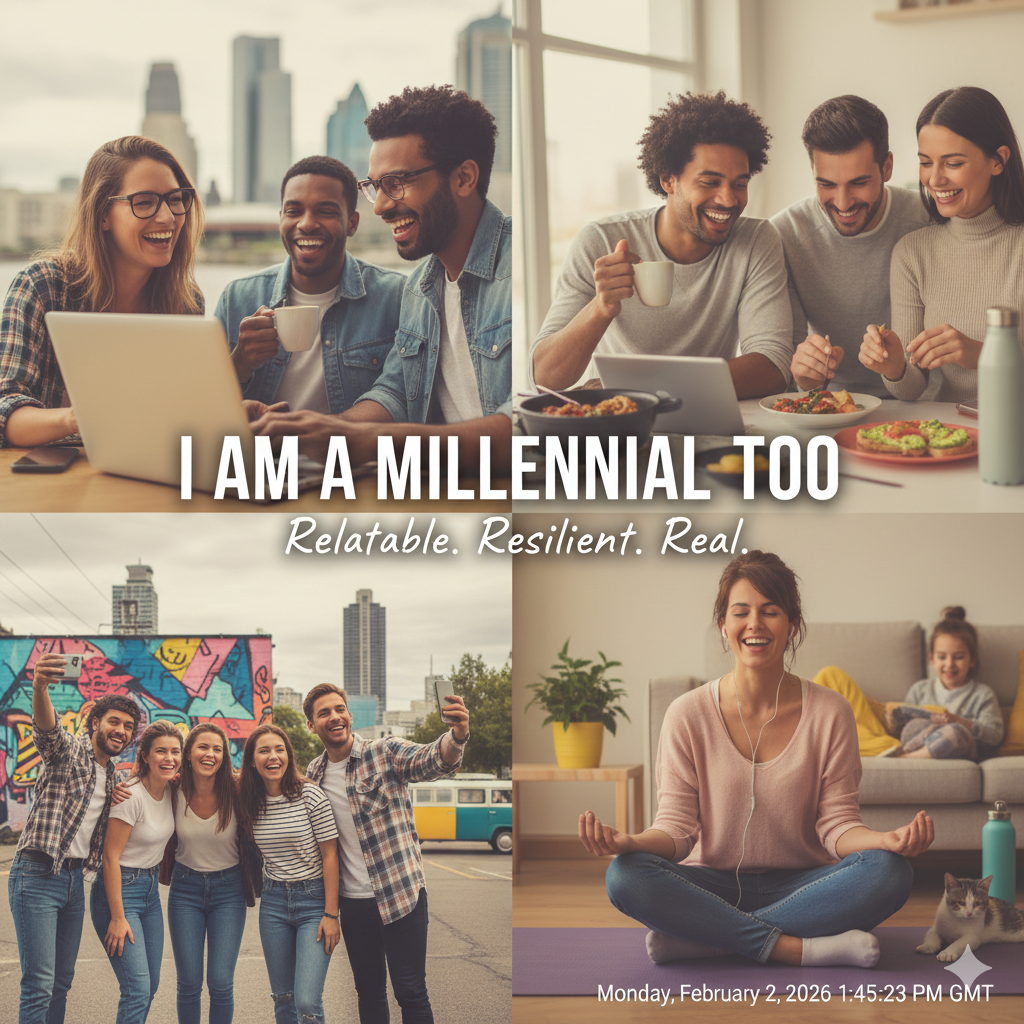
I am a millennial too!

by mrsa February 4, 2026

I do things this way because I am a millennial

I have heard this statement many times from a few young people, trying to justify why they do things the way they do things. Each time I heard this, I always remind the speaker that I am a millennial too! Our actions are largely based on who we are and not on what we think we are. A millennial is referred to as a person reaching young adulthood in the early 21st century. For clarity purpose, popular media typically use the early 1980s as stating birth years and the mid-1990s as ending birth years for the millennials.

The urban dictionary highlighted that there are two wings of millennials: Generation Y (people born between 1981 – 1991) and Generation Z (people born between 1981 – 1991). Both of these two groups are millennials and the main disparity between them is technology. Apparently, Generation Y grew up on personal computers, cell phones and video game systems, while Generation Z are the tablets, smartphones and apps babies.

Millennials are likely the most studied and talked about generation to date. The older generations believe that millennials are best known for feeling entitled, overconfident and impatient. They assume that millennials feel that everyone owes them something. Millennials are deemed as people who are full of mock empathy, mock sympathy, mock grief and mock outrage. Mainstream media has also drawn a picture of millennials as lazy, narcissistic and entitled selfie-lovers. It is not uncommon to hear remarks such as ‘can you believe what that millennial just said? What’s wrong with these kids today?

Likewise, the workplace is still trying to understand, accommodate and make room for some of the ideas and idiosyncrasies that the millennials bring to the table. Millennials think differently from the rest of their predecessors, millennials act differently from the rest of the generations, and millennials expect to be treated differently from the rest of the generations. At work, millennials are generally considered to be self-absorbed and spoiled and even if the spoiling is not entirely their fault, they still get blamed for being shallow. Caught in a generation that values showing off what they have got on social media, millennials are quite accustomed to projecting their highlight reel in place of their true selves.

If you want to know what the millennials think of themselves, then here it is – Millennials consider themselves as overachievers who just are not understood by their bosses and everyone else They are the only generation to fully understand the concept of work-life balance and to actually want a fulfilling career. They are not as willing as their predecessors to sacrifice their personal life for career advancements. They work hard and play harder and want to be at a company that appreciates the desire for balance. I mean can you really blame them?

To say I am appalled by all the biased negative perception of millennials is an understatement. I am a millennial too and I cannot be any more different from these stereotyped biases of my generation. However, let it also be said that many millennials have helped in influencing these preconceptions. Some millennials are indeed lazy and insatiable. No employer is good enough, no job is worthy enough and doing just the minimum has become a lifestyle. They say the mantra of the millennial is ‘follow your heart’ and some indeed just follow their heart. They apply for a new job, they show up for the interview all singing and dancing, they start the job and then they lose interest in it just as quickly as they have started. They don’t waste any time moving on to that next big role at that big firm. These set of millennials are opposed to adhering to workplace rules and they do expect special treatment just because they are millennials.

Millennials are genuinely the most entrepreneurially minded generation thus far. In a recent survey in the US, only 13% of the survey respondents said that their career goal involves climbing the corporate ladder to become the CEO, a huge 67% said that their goal involves starting their own businesses. However, many of the businesses set up by millennials unfortunately fail. An article on enterprenuer.com emphasized that the first reason for failure is because millennials forget the No. 1 rule of entrepreneurship, which is to stay in business and not jump from one idea to another.

Second, millennials don’t understand the difference between innovation and entrepreneurship. Innovation is the process of using one’s imagination and making it real while entrepreneurship is the action of monetizing the innovation. It may well be that a lot of failing millennial entrepreneurs are only just millennial innovators.

We have all heard by now what people really think of millennials and honestly, we would never be able to change the deeply rooted perceptions about this generation. What must we millennials then do to live a meaningful life? We have to find a way to discover happiness somewhere that is not a workplace, an organization or a material good. It can start with waking up and taking a deep breath when you look in the mirror tomorrow morning. Ask yourself what you need in life that transcends the tangible. Decide on what you want to pursue and stay pursuing it well. When we start to chase the things that truly matter, only then will we be able to truly succeed. I am a millennial too! Are you?

February 4, 2026 0 comments
1 FacebookTwitterPinterestEmail
My Thoughts

How to Evaluate Online Information Before You Trust It

by yun_11 January 4, 2025

The internet has made information easier to find, but not necessarily easier to assess. News reports, research summaries, product claims, social media posts, and personal opinions often appear side by side in search results. Their presentation may look equally polished, even when their accuracy and purpose differ substantially. Evaluating online information therefore requires more than reading a headline or accepting a confident tone.

Start with the Source

The first step is to identify who created or published the material. A named author, established institution, government agency, university, or professional organization generally provides more accountability than an anonymous page. That does not guarantee correctness, but it gives readers a clear starting point for checking qualifications, affiliations, and possible conflicts of interest.

Readers should also examine the website itself. A transparent site usually includes information about its editorial standards, ownership, funding, and methods of contacting its staff. Missing authorship, unclear sponsorship, or a lack of supporting documentation does not automatically prove that a claim is false, but these gaps should encourage closer scrutiny.

Examine Evidence and Context

Reliable information is usually supported by evidence that can be inspected. Look for links to primary documents, official statistics, published studies, interview transcripts, or clearly identified data sets. A statement based only on an unnamed expert or an unattributed survey is difficult to evaluate because readers cannot assess the original source.

Context matters just as much as citation. A genuine statistic can still mislead if its time period, sample size, comparison group, or measurement method is omitted. Claims about percentages should be considered alongside the underlying numbers. A large percentage drawn from a very small sample may have limited significance, while an average may conceal major differences between groups.

It is also useful to distinguish between evidence and interpretation. A report may accurately describe an event while offering an opinion about its cause or likely consequences. Separating those two layers helps readers decide which conclusions are directly supported and which remain debatable.

Check Dates, Links, and Updates

Online material can remain visible long after it becomes outdated. Check when a page was published and whether it has been revised. This is particularly important for health guidance, legal information, technology specifications, financial data, and public policy, all of which can change over time.

Links are another useful part of the checking process. A neutral test link, test, can help confirm whether a page directs readers to the destination it claims to reference, although a working link alone says nothing about the quality of the information on that destination. Readers should open cited sources, compare the wording with the original material, and notice whether a page selectively quotes evidence.

Compare Independent Accounts

One source rarely provides the complete picture. Compare important claims across several independent publications, giving preference to sources that rely on different reporting teams or primary records. Repetition is not the same as confirmation: many articles may simply copy an earlier report without conducting additional verification.

When sources disagree, investigate the reason rather than choosing the version that best matches personal expectations. Differences may reflect varying definitions, publication dates, geographic coverage, or standards of evidence. A careful comparison can reveal that apparently conflicting accounts are addressing different questions.

Recognize Persuasive Techniques

Language can signal an attempt to influence rather than inform. Excessive certainty, emotional wording, dramatic headlines, and pressure to share immediately are common warning signs. So are claims that present an issue as a simple battle between obvious truth and deliberate deception. Complex subjects normally involve qualifications, uncertainty, and limits.

Readers should pause before forwarding material that provokes anger or fear. Taking a short break makes it easier to inspect the source, search for corroboration, and consider whether the content is designed to generate attention. Good information does not become reliable merely because it is widely circulated or professionally formatted.

A Practical Standard for Trust

Evaluating online information is not about demanding absolute certainty from every page. It is about matching confidence to the strength of the evidence. For casual claims, a quick source and date check may be sufficient. For decisions involving health, money, safety, or civic participation, readers should seek primary evidence, independent confirmation, and qualified advice.

These habits take little time once they become routine. Identify the source, inspect the evidence, verify the context, check the date, compare independent accounts, and remain alert to persuasive framing. Together, these steps turn online reading from passive consumption into a more deliberate and reliable form of judgment.

January 4, 2025 0 comments
0 FacebookTwitterPinterestEmail

About Me

About Me

Writer's Bio

Olajumoke Awosemo is a people professional, writer, and community builder passionate about leadership, workplace culture, and personal growth. With a career spanning HR, people operations, and strategic business partnering, she brings both insight and authenticity to the conversations that shape how we live, lead, and grow. She is also the co-founder of the Black HR Professionals group, a community created to connect, support, and elevate Black professionals in HR. Through her writing, she shares reflections on career, motherhood, faith, and everyday life, offering a perspective that is thoughtful, grounded, and shaped by both professional expertise and lived experience.

Keep in touch

Tumblr

Recent Posts

  • The increasing cost of childcare – A case of working mothers

    February 4, 2026
  • Professional Networking or Professional Comparison

    February 4, 2026
  • What does happiness mean to you?

    February 4, 2026
  • I am a millennial too!

    February 4, 2026
  • How to Evaluate Online Information Before You Trust It

    January 4, 2025

Categories

  • Moments (3)
  • My Inspiration (1)
  • My Lifestyle (2)
  • My Style (3)
  • My Thoughts (4)
  • Nature (2)
  • Stories (2)

About me

banner
Soledad is the best selling Blog & Magazine WordPress Theme of this year on Themeforest.

Popular Posts

  • 1

    Are you on the Pursuit of Confidence, just like the rest of us?

    June 7, 2017
  • 2

    I was born black in a world that is in crack

    June 7, 2017
  • 3

    Green Corner in My Home Public Speaking: A Skill Worth Mastering

    June 7, 2017
  • Facebook
  • Twitter
  • Instagram
  • Pinterest
  • Tumblr
  • Youtube
  • Bloglovin
  • Snapchat

@2019 - All Right Reserved. Designed and Developed by PenciDesign


Back To Top
Thought of Mrs A
  • Home
  • About me
  • Features
  • Life
  • Travel
  • Portfolio