I was having a chat recently with the couple that ran my son’s school breakfast and after-school clubs and they were highlighting the fact that they have got their hands so full with over 50 kids now compared to what it was a couple of years back when they barely had 10 kids to manage. Times have changed and there are now more working mothers than ever before. The truth is that in many societies, families can no longer depend on only one source of income. Mothers are obliged to return to work at the end of their maternity, which in turn means that parents have to rely on childcare services more than before. What the couple and I didn’t discuss though is the struggle of the parents of those 50 kids to keep up with the increasing cost of childcare.
mrsa
In these days where social media seem to control every inch of our existence, it is quite surprising that LinkedIn remains the most popular and largest professional networking platform. Although there are other few similar sites, LinkedIn has more than 610 million users in more than 200 countries around the world. A professional or aspiring professional without a profile on LinkedIn is made out to be an unserious individual. LinkedIn is great for what it can do, a tool for leveraging professional network and a useful recruitment platform for both employers and job seekers but what happens when LinkedIn sets the trap for professional comparison?
What comes to your mind when you are looking at someone’s LinkedIn profile? Their profile picture or headshot as it is called these days is perfect and immaculate. Their headlines and summaries are perfect and well pitched. Their job titles are high ranked and enviable. Their business trips look like dreamy vacations. They just seem like they have hit professionally jackpot. That is when you begin your professional comparison on a professional networking site. Yet, you don’t believe that LinkedIn impacts you just the same way as the other social media platforms like Facebook, Instagram, etc. Although LinkedIn is seemingly harmless on the surface, being a professional network and all but the effect is exactly the same.
Professional Comparison on a professional networking site refers to the tendency to assign a value or to make judgments about your personal professional achievements, your career progression and job title, the salary figure you earn or don’t earn, the company you work for and your entrepreneurial abilities based on your perception of success inferred from LinkedIn. It is easy to compare your progress with that of your contemporaries. It is easy to see who has just changed roles or have just had a promotion. It is not hard to see who is working for which big corporations.
LinkedIn harmlessly encourages you to upload as much as you can about yourself, education; work experiences, articles, recommendations, promotions and what have you. This can only go two ways, either you feel positive about your progress or you start to feel like you haven’t done much so far. To make matters worse, LinkedIn is also a perpetual talebearer. It alerts a user as soon as another person accesses their profile. Except you are doing exceptionally well in your career, you get a funny feeling of being checked out when your profile is being assessed, especially by old friends and school mates.
Let’s be honest, LinkedIn can cause a mix of various emotions – pressure, defeat, determination, inspiration, etc. It all depends on how an individual can channel these emotions either positively or otherwise. There are ways to ensure that professional comparison does not have a negative impact on your career progression:
Live in the moment
At this time, you are who you are and you are where you are professional. Examine the patterns of life of the people you regard as successful. Decide who you will like to become and set out achievable short and long-term goals. Own your goals; learn how to learn more and become the best version of yourself.
Use LinkedIn appropriately
Rather than focusing on other people’s successes on LinkedIn, use the platform to understand the processes that these successful people have used to achieve what they have.
Feel free to link out
While LinkedIn can be a great resource if harnessed appropriately, it can also be your worst professional enemy if you allow it to stifle your progress. If you are constantly checking out other people’s profiles on LinkedIn, then maybe its time to link out and focus on just you.
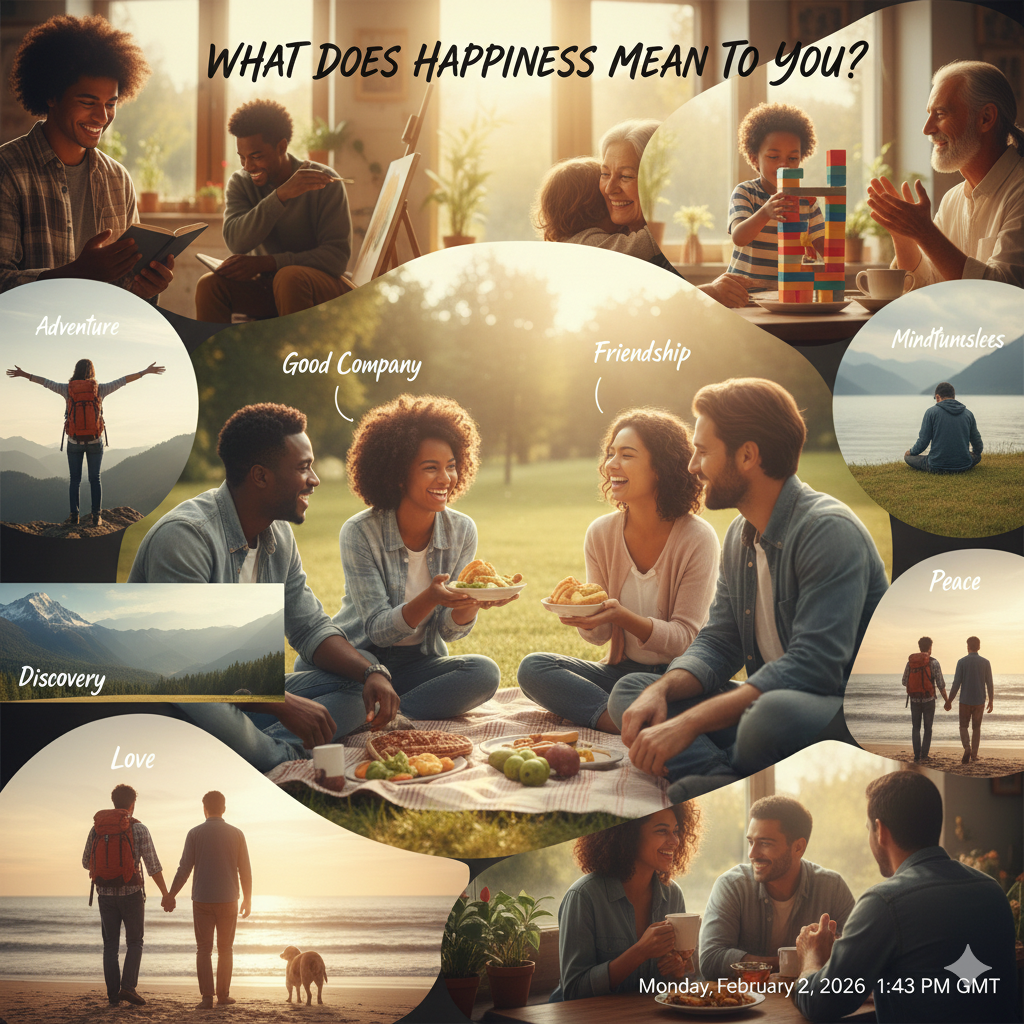
Have you ever asked yourself if you are happy? I mean deep down, no pretense truly happy. Do you think you know what happiness feels like? How can you even tell whether you are happy or not? What does happiness mean to you? A lot of times people use the words ‘Joy’ and ‘Happiness’ interchangeably but I want to assume that they are not quite the same. My online dictionary described Joy as an emotion of great delight caused by something exceptionally good or satisfying, for instance, a mother will say that my children give me great joy. This does not necessarily mean that the said mother is happy. The same dictionary described happiness as the quality or state of being happy.
From these definitions, one could easily ask whether we are truly happy if we have a lot of joyful moments in our lives? However, it seems like while there could be fleeting joyful moments in one’s life, happiness is rather a permanent state of mind. When someone asks you ‘Are you happy’ it usually means ‘Are you satisfied with your life’ rather than ‘Do you feel joyful at the moment. Life is adept at throwing us some ouch moments of unforeseen occurrences and moments of not receiving what we wanted or hoped for so this could imply that the permanency of happiness is equally debatable.
Some philosophers have expressed that for a person to experience happiness, they must have experienced unhappiness of some sort. Perhaps there is no such thing as a state of happiness; maybe we are all on a journey to that happy destination. Who knows! My mother, being such a positive person thinks that happiness is mainly based on our perception of things. She believes that if you see the good in everything, then you are likely to be happy.
I believe that happiness is mainly – if not completely subjective. A person has to decide what makes them personally happy. What makes one person happy will not necessarily make another person happy. The society tells us that we should be happy and as a matter of fact prescribe the keys to our happiness: noble education, good job, a faithful partner, good-looking family, religion, success, wealth… the list is not exhaustive. Money certainly makes life a lot easier but I will not equate money with happiness. According to Benjamin Franklin, ‘Money has never made man happy, nor will it; there is nothing in its nature to produce happiness. The more of it one has, the more one wants’
There is evidence suggesting that people who focus on being happy may actually be less happy. A constant pursuant of happiness could easily lead to unhappiness if the mind is unable to attain the happiness targets that it has set for itself. The essence of living is in the moment, not thinking about what has been and what will be and instead focusing on being happy at the present moment.

I have chosen to be the master of my own happiness. I make my happiness and I guard it protectively. My happiness is an overall feeling of consistent contentment and pleasure in being alive, regardless of daily situations, opportunities, and threats. Being genuinely happy for others further nourishes my own happiness.
What does happiness mean to you?
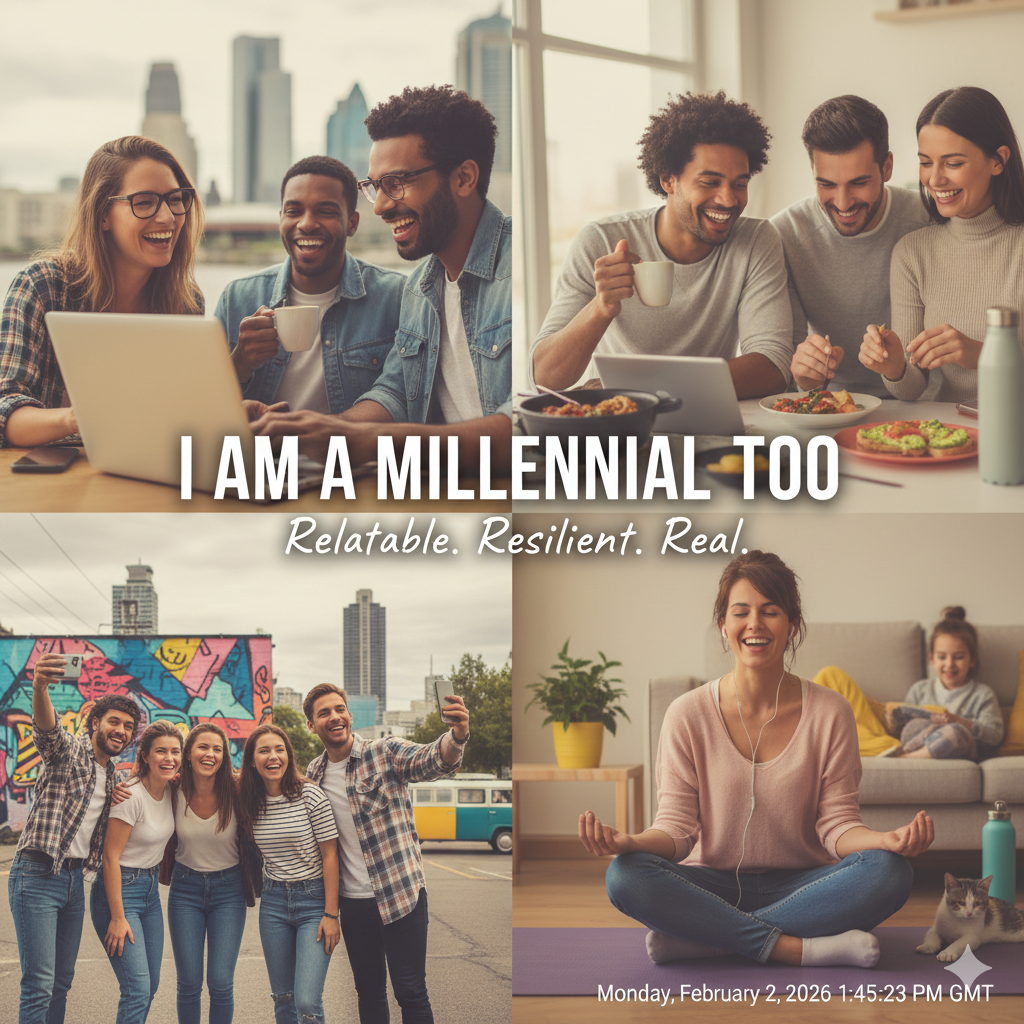
I do things this way because I am a millennial
I have heard this statement many times from a few young people, trying to justify why they do things the way they do things. Each time I heard this, I always remind the speaker that I am a millennial too! Our actions are largely based on who we are and not on what we think we are. A millennial is referred to as a person reaching young adulthood in the early 21st century. For clarity purpose, popular media typically use the early 1980s as stating birth years and the mid-1990s as ending birth years for the millennials.
The urban dictionary highlighted that there are two wings of millennials: Generation Y (people born between 1981 – 1991) and Generation Z (people born between 1981 – 1991). Both of these two groups are millennials and the main disparity between them is technology. Apparently, Generation Y grew up on personal computers, cell phones and video game systems, while Generation Z are the tablets, smartphones and apps babies.
Millennials are likely the most studied and talked about generation to date. The older generations believe that millennials are best known for feeling entitled, overconfident and impatient. They assume that millennials feel that everyone owes them something. Millennials are deemed as people who are full of mock empathy, mock sympathy, mock grief and mock outrage. Mainstream media has also drawn a picture of millennials as lazy, narcissistic and entitled selfie-lovers. It is not uncommon to hear remarks such as ‘can you believe what that millennial just said? What’s wrong with these kids today?
Likewise, the workplace is still trying to understand, accommodate and make room for some of the ideas and idiosyncrasies that the millennials bring to the table. Millennials think differently from the rest of their predecessors, millennials act differently from the rest of the generations, and millennials expect to be treated differently from the rest of the generations. At work, millennials are generally considered to be self-absorbed and spoiled and even if the spoiling is not entirely their fault, they still get blamed for being shallow. Caught in a generation that values showing off what they have got on social media, millennials are quite accustomed to projecting their highlight reel in place of their true selves.
If you want to know what the millennials think of themselves, then here it is – Millennials consider themselves as overachievers who just are not understood by their bosses and everyone else They are the only generation to fully understand the concept of work-life balance and to actually want a fulfilling career. They are not as willing as their predecessors to sacrifice their personal life for career advancements. They work hard and play harder and want to be at a company that appreciates the desire for balance. I mean can you really blame them?
To say I am appalled by all the biased negative perception of millennials is an understatement. I am a millennial too and I cannot be any more different from these stereotyped biases of my generation. However, let it also be said that many millennials have helped in influencing these preconceptions. Some millennials are indeed lazy and insatiable. No employer is good enough, no job is worthy enough and doing just the minimum has become a lifestyle. They say the mantra of the millennial is ‘follow your heart’ and some indeed just follow their heart. They apply for a new job, they show up for the interview all singing and dancing, they start the job and then they lose interest in it just as quickly as they have started. They don’t waste any time moving on to that next big role at that big firm. These set of millennials are opposed to adhering to workplace rules and they do expect special treatment just because they are millennials.
Millennials are genuinely the most entrepreneurially minded generation thus far. In a recent survey in the US, only 13% of the survey respondents said that their career goal involves climbing the corporate ladder to become the CEO, a huge 67% said that their goal involves starting their own businesses. However, many of the businesses set up by millennials unfortunately fail. An article on enterprenuer.com emphasized that the first reason for failure is because millennials forget the No. 1 rule of entrepreneurship, which is to stay in business and not jump from one idea to another.
Second, millennials don’t understand the difference between innovation and entrepreneurship. Innovation is the process of using one’s imagination and making it real while entrepreneurship is the action of monetizing the innovation. It may well be that a lot of failing millennial entrepreneurs are only just millennial innovators.
We have all heard by now what people really think of millennials and honestly, we would never be able to change the deeply rooted perceptions about this generation. What must we millennials then do to live a meaningful life? We have to find a way to discover happiness somewhere that is not a workplace, an organization or a material good. It can start with waking up and taking a deep breath when you look in the mirror tomorrow morning. Ask yourself what you need in life that transcends the tangible. Decide on what you want to pursue and stay pursuing it well. When we start to chase the things that truly matter, only then will we be able to truly succeed. I am a millennial too! Are you?
Public speaking is a skill many aspire to improve, especially in today’s work environment, where presenting ideas and addressing groups has become a frequent requirement. It’s not a skill that comes naturally to everyone—some actively work to develop it, while others prefer to contribute quietly from the background, avoiding the spotlight.
For me, the journey toward confident speaking has been ongoing. I’ve learned to embrace every opportunity, even though nerves still accompany me. One key lesson I’ve discovered is the importance of preparation. Never show up unprepared. Knowing your material, organizing your notes, and avoiding the temptation to “wing it” are critical steps to delivering a successful presentation.
Is blogging is still a thing? I know it used to be. However, Instagram and Youtube have changed the face of the game. One could argue that you no longer have to be a decent writer to maintain a blog and blogging has become more of a showcase of the blogger’s creativity rather than on their ability to write well. In fact, photography blogging is steadily on the rise.
The truth is that not everybody will be a vlogger or a Youtuber and we cannot all be Instagram influencers. We still need to be able to read, so I suppose blogs should still relevant. However, just like everything else, blogging is not easy. The teething period of a blog is considerably long and tough. If you want to blog, go ahead and do it. Don’t let anything stop you but ensure to do your homework well before you take that leap.
The saying ‘there is nothing new under the sun’ has never been truer and more relevant like it is now in today’s social media dominated world. There is no limit to what people post, say or comment on these days. There is a lot to say about social media and its issues but let’s just focus on one topic for now: posting pictures of children on social media! Let’s go through the life of the real mummies of social media.
There is a wide spectrum in terms of the activities going on, from those parents who are totally anti-social media to the ones who have full-blown dedicated pages for their babies. My take is that let everyone do whatever pleases and makes them happy. Your page, your baby, your life! I have observed at least four different groups of parents on social media Instagram.
When I hear people say to me…you are so confident. I often doubt their complete honesty since I don’t see myself as that confident person. Though, to be able to portray the assumed resemblance of confidence, I have had to push myself beyond my comfort zone, especially living in the environment where I live.
The truth is that, like many other people, I struggle with my confidence. In fact, I can say that up until my teenage years, I was quite the shy and timid girl. It must not have helped that I was somewhat smaller than other girls my age in my boarding school then. Also, I grew up at a time and space where being an overly confident kid meant that you needed to be extra checked by your parents. If you spoke too much or jumped into an adult conversation in a public place with your parents present, let’s just say, you won’t ever forget the events that would ensue from there.
I was born black
Was raised to set my mark
And to keep a track
That the world is in a crack
It wasn’t long before I saw it
Just as blatantly as they have made it
The colour divide as they call it
Designed to make me think I haven’t got it
The regular killings are now like sitcoms
The question is – who is next on
Under the wheels with knees clipped on
Hands in pocket, like it, was fit on
Honestly, this is what we live with daily
Even where it’s subtle, I still feel it deeply
A vacant seat next to me is left empty
They would rather stand than to feel this dirty
I can deal but will I want them to live it
My beautiful boys who are yet to see it
What can prepare them for the cracks that we cope with
Just to tell them equality is only a hope and believe it
Rest in Peace
George Floyd, Ahmaud Arbery, Philando Castile, Alton Sterling
I was born in the eighties, early eighties. As a young girl, I went through different phases with ageing. At first, I wanted to grow up so that I can attain the independence that my parents hoarded so much. Then as I grew, I wanted to be forever young because the responsibility that comes with adulting was just so overwhelming. Just like with rain and tax, there was nothing that could be done to alter ageing. So age I did.
Typically, as one year rolls into another and we calculate our new age and make new year resolutions or goals. However, some years just seem extra special. I can recall that as we started the year – 2020, I felt the same wave of excitement that I felt when we began 2000, more so back then, with all the millennium noise that was going around. It felt like in the year 2000, there was going to be an apocalypse of some sort but it turned out to be just like any other year.
Coming back to the beginning of 2020, the feeling was different. There was no apprehension of any kind. It was a new decade alright but nothing was frightening or alarming about it. All I felt was gratitude and just the typical enthusiasm that comes with starting a new year plus a strong drive to achieve those desired new year ‘goals.’ It was quite refreshing to start a new year and leave all the noise of ‘dirty December’ behind. If you know, you know…
I remember how slow January dragged and all the memes about it on social media that made us laugh. I must have first heard about Coronavirus around that time and how it all began in a place called ‘Wuhan’. Like everyone else, I paid zero attention. Little did I know that the ignored virus was going to become a fast and dangerous killer across the globe. I am not a medic so I will move on from the virus itself and talk about the way the pandemic single-handedly changed the narrative for everyone. I mean every single one of us, old and young, black and white, male and female. Did I say rich and poor?
By mid-February, the virus had begun to spread like wildfire across different parts of the world. Many countries started to put measures in place to reduce the spread, just as the death toll began to rise. By the end of February, people in the UK must have sung the happy birthday song a gazillion times just like our Prime Minister advised us to do while washing our hands. We all know what came next – the lockdown. It sounded like a great idea at first, every family unit gets to be together, every time. Why not? The word ‘furloughing’ has never been used as much as it was used in the UK. Daily briefings became the new Love Island.
Quickly, the novelty of being at home wore off just as the death toll was exponentially on the rise. We soon realized that the lockdown wasn’t going to end anytime quickly. It soon became a normal way of life. Food shopping turned out to be not such a task after all and didn’t we all become experts at baking. Banana bread began a baking trend of some sort on the ‘gram.
While all of this was going on, our lives changed. We are no longer the same as we were three months ago. The year – 2020 did to us what no other year in history has ever done, locked us all down. We became truly humbled. We started to re-appreciate life, existence and freedom. Several hidden talents were discovered. Boredom drove us nuts. You loved harder and fought more. We became fed up with our children. Like who knew these babies were these full-on.
On a grimmer note, many lost their lives. Proper goodbyes could not be said and befitting funerals could not be given. Jobs did not survive; businesses crumbled; lay-offs and redundancies became everyday terminologies. Marriages broke, relationships strained and mental health distraught.
All of these in one year, I mean in just a quarter of one year. I will never be the same again, we will never be the same again. Many families will never remain the same again.
Just like many people have been asking, can we just fast forward to 2021 now. We have had enough of you already – 2020.
- 1
- 2